"Patients are often obsessed with fasting and cleansing. But what their body really needs is deep nourishment."
-Dr. Ursa Shapla
In the past, recovering from illness was something everyone knew how to do. Across every healing tradition I have studied, the method is similar: rest, eat simple foods that are easy to digest, and nourish deeply. We all know about chicken soup in the West. There are delicious variations on that same theme that I would love to share with you here. And of course, they aren't just for recovering from illness. Eating these meals for a few days acts as a deeply nourishing cleanse.
Broth is key.
Not just the stuff from the carton on a shelf. That is fine in a pinch. But, you want to make a huge batch of broth every couple of months and freeze it. I like to freeze my broth in serving sizes so I can easily grab just the amount that I need. I love Souper Cubes, but there are many brands to choose from.
My process is simple. I never toss out chicken bones. I freeze them until I have a potful. Once I have enough, I simply fill a pot with them, cover with water, add 1/4 cup apple cider vinegar, and cook several hours until the bones are soft (if using chicken bones-which is recommended for the following recipes). Chicken feet and necks make the best broth ever, since they have a high concentration of collagen.
I keep it simple, and add nothing but vinegar to extract more minerals. If you want to toss in more veggies, do so only in the last hour so that they don't absorb more minerals from the bones.
The Recipes

Congee
Congee is a simple, slow-cooked rice porridge that has been used for centuries as a gentle, deeply nourishing food during illness and recovery. As the rice breaks down, it becomes easy to digest while delivering steady energy, hydration, and warmth when the body is depleted. In Chinese medicine, congee is valued for supporting the digestive system so the body can direct more energy toward healing instead of digestion.
This is a basic, gentle template. You can adjust the ingredients as you start to feel stronger.
Yields: 2-3 servings
Prep time: 5 minutes
Cook time: 1.5 - 2 hours (or 45 minutes in a pressure cooker)
Ingredients:
½ cup White Rice (Jasmine or short-grain): Easy to digest and the primary Qi tonic.
¼ cup Yi Yi Ren (Job's Tears/Chinese Barley): Crucial for resolving dampness and clearing heat. Most Asian groceries have this, and call it pearled barley.
8-10 cups bone broth: A high broth-to-rice ratio creates the soothing, hydrating porridge texture.
The Aromatics & Protein (All are optional but recommended):
1-2 inches Fresh Ginger, sliced and peeled. Warms the Spleen and Stomach, counteracts nausea, and guides the action of the other ingredients.
2-3 Spring Onions (Green Onions): Use the white parts only for the cooking process. They gently release the exterior and support digestion.
¼ lb (approx. 100g) Organic Chicken Breast or White Fish (like Cod): A small amount of lean, easy-to-digest protein to support Qi and blood. (Optional, can be omitted)
The Finishing Touches (Add after cooking):
A few sprigs of Fresh Cilantro, chopped: Gently clears heat and toxins.
A pinch of Sea Salt: To taste. Guides the action of the congee deeper into the Kidneys.
A few drops of Toasted Sesame Oil (optional): Adds a rich flavor and mildly nourishes Yin.
Instructions:
Rinse: Thoroughly rinse the white rice and Yi Yi Ren (Job's Tears-optional but fantastic if you can find them) in cold water until the water runs clear.
Combine: In a large pot (a heavy-bottomed pot like a Dutch oven is best), combine the rinsed rice, Yi Yi Ren, water/broth, sliced ginger, and the white parts of the spring onions.
Bring to a Boil, then Simmer: Bring the pot to a rolling boil over high heat. Once boiling, immediately reduce the heat to the lowest possible setting to maintain a very gentle simmer.
Cook Slowly: Partially cover the pot, leaving a small crack for steam to escape. Let it simmer for 1.5 to 2 hours, stirring occasionally to prevent the rice from sticking to the bottom. The congee is ready when the grains have completely burst and the consistency is thick, creamy, and porridge-like.
Pressure Cooker Shortcut: Combine all ingredients (except finishing touches) in the cooker. Cook on high pressure for 30-40 minutes, then allow for a natural pressure release.
Add Protein (If using): If you are using chicken or fish, add it in the last 20-30 minutes of cooking. For chicken, use a whole piece and shred it with forks at the end. For fish, add flaked pieces.
Finish and Serve: Once the congee is done, remove the large pieces of ginger and spring onion. Stir in the sea salt to taste.Ladle the congee into a bowl.Garnish with fresh cilantro and a few drops of toasted sesame oil.For extra Yin nourishment, you can stir in a few very thin slices of pear at the very end, allowing them to just warm through.
This is a basic, gentle template. You can adjust the ingredients as you start to feel stronger.
Yields: 2-3 servings
Prep time: 5 minutes
Cook time: 1.5 - 2 hours (or 45 minutes in a pressure cooker)
Ingredients:
½ cup White Rice (Jasmine or short-grain): Easy to digest and the primary Qi tonic.
¼ cup Yi Yi Ren (Job's Tears/Chinese Barley): Crucial for resolving dampness and clearing heat. Most Asian groceries have this, and call it pearled barley.
8-10 cups bone broth: A high broth-to-rice ratio creates the soothing, hydrating porridge texture.
The Aromatics & Protein (All are optional but recommended):
1-2 inches Fresh Ginger, sliced and peeled. Warms the Spleen and Stomach, counteracts nausea, and guides the action of the other ingredients.
2-3 Spring Onions (Green Onions): Use the white parts only for the cooking process. They gently release the exterior and support digestion.
¼ lb (approx. 100g) Organic Chicken Breast or White Fish (like Cod): A small amount of lean, easy-to-digest protein to support Qi and blood. (Optional, can be omitted)
The Finishing Touches (Add after cooking):
A few sprigs of Fresh Cilantro, chopped: Gently clears heat and toxins.
A pinch of Sea Salt: To taste. Guides the action of the congee deeper into the Kidneys.
A few drops of Toasted Sesame Oil (optional): Adds a rich flavor and mildly nourishes Yin.
Instructions:
Rinse: Thoroughly rinse the white rice and Yi Yi Ren (Job's Tears-optional but fantastic if you can find them) in cold water until the water runs clear.
Combine: In a large pot (a heavy-bottomed pot like a Dutch oven is best), combine the rinsed rice, Yi Yi Ren, water/broth, sliced ginger, and the white parts of the spring onions.
Bring to a Boil, then Simmer: Bring the pot to a rolling boil over high heat. Once boiling, immediately reduce the heat to the lowest possible setting to maintain a very gentle simmer.
Cook Slowly: Partially cover the pot, leaving a small crack for steam to escape. Let it simmer for 1.5 to 2 hours, stirring occasionally to prevent the rice from sticking to the bottom. The congee is ready when the grains have completely burst and the consistency is thick, creamy, and porridge-like.
Pressure Cooker Shortcut: Combine all ingredients (except finishing touches) in the cooker. Cook on high pressure for 30-40 minutes, then allow for a natural pressure release.
Add Protein (If using): If you are using chicken or fish, add it in the last 20-30 minutes of cooking. For chicken, use a whole piece and shred it with forks at the end. For fish, add flaked pieces.
Finish and Serve: Once the congee is done, remove the large pieces of ginger and spring onion. Stir in the sea salt to taste.Ladle the congee into a bowl.Garnish with fresh cilantro and a few drops of toasted sesame oil.For extra Yin nourishment, you can stir in a few very thin slices of pear at the very end, allowing them to just warm through.

Kitchari
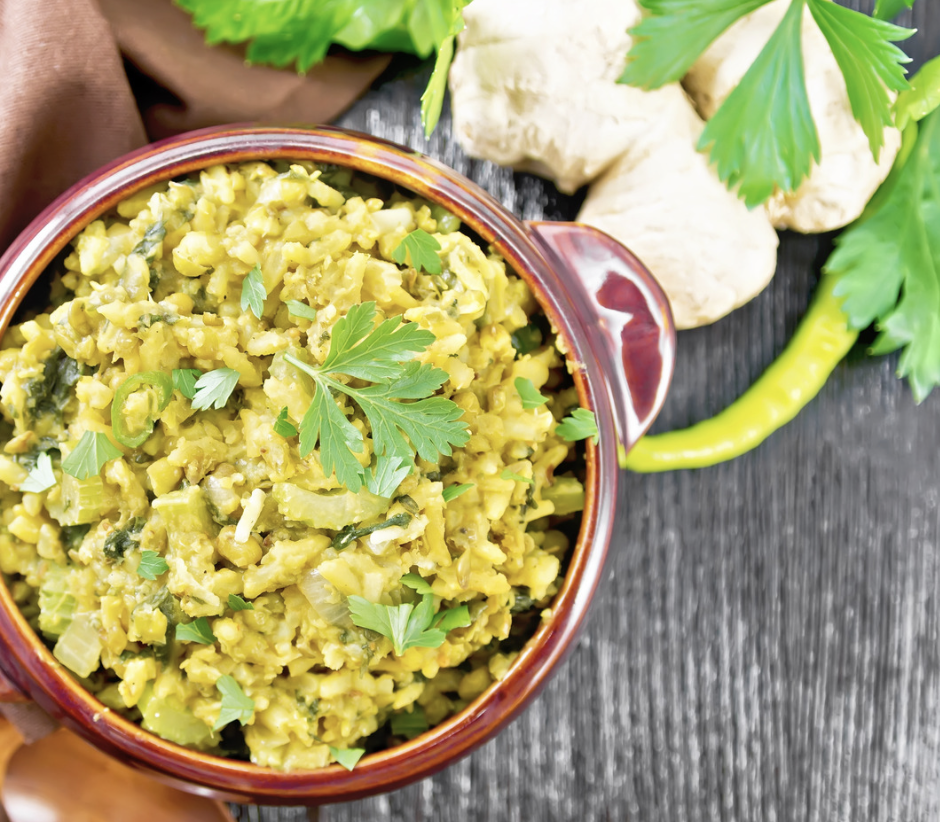
Kitchari is a traditional Ayurvedic dish made from split mung beans and rice, slowly cooked with warming spices into a soft, stew-like consistency that is both cleansing and nourishing. Compared to congee, which is primarily restorative and ultra-gentle, kitchari offers more protein, fiber, and digestive stimulation, making it ideal when appetite is returning but the body still needs support. Think of congee as recovery food and kitchari as the next step—still easy to digest, but more strengthening as you transition back to regular meals.
I recommend replacing the water with broth in the recipe, for added nutrient density.
My favorite Kitchari recipe can be found here: Banyan Botanicals is my favorite resource for Ayurvedic herbs, and they even have a Kitchari Kit if you don't want to spend a lot of time trying to find the ingredients.
I recommend replacing the water with broth in the recipe, for added nutrient density.
My favorite Kitchari recipe can be found here: Banyan Botanicals is my favorite resource for Ayurvedic herbs, and they even have a Kitchari Kit if you don't want to spend a lot of time trying to find the ingredients.